The New Auteur: How Intelligent Assistants Are Reshaping Modern Cinema
Alex Chen
Senior Film Technology Correspondent
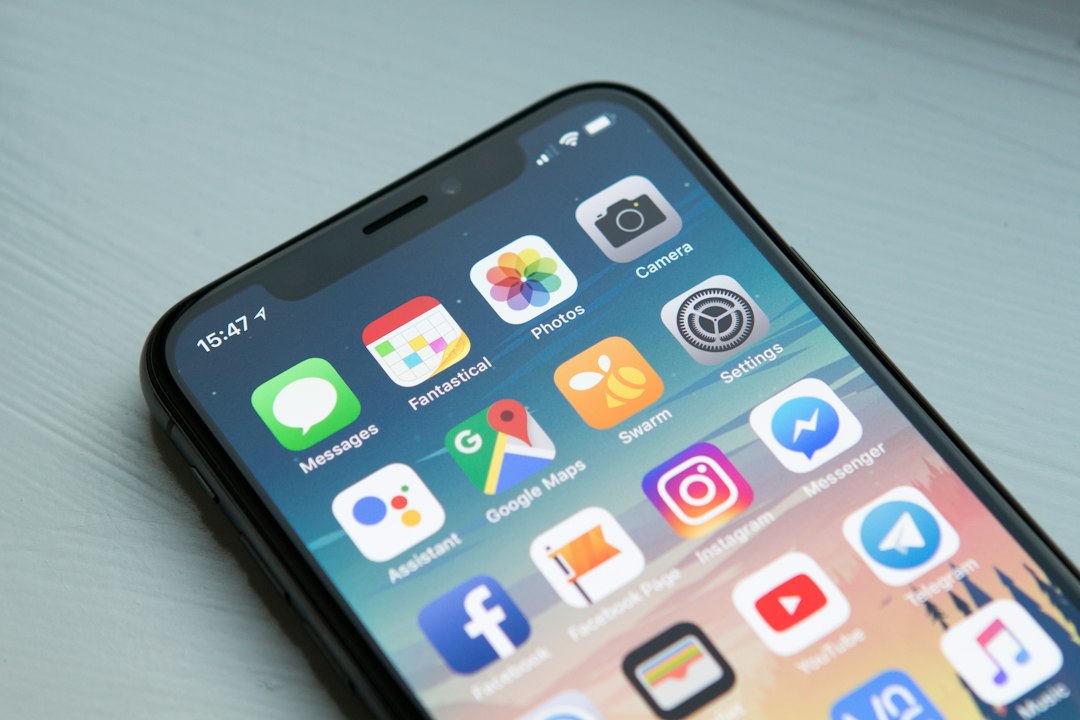
For decades, the director's chair was a solitary throne. The vision was singular, the voice undiluted. But a quiet revolution is sweeping through the studios of Los Angeles and the independent backlots of Austin, Texas. We are entering the era of the augmented auteur—a period where the creative spark of the filmmaker is amplified, not replaced, by intelligent systems that never sleep, never lose the script, and never forget a continuity error.
The American film industry has always been a battleground between art and logistics. For every hour of magic captured on screen, there are hundreds of hours of tedious, labor-intensive work: sifting through footage, syncing audio, managing call sheets, and wrestling with the complex syntax of edit decisions. It is here, in the unglamorous trenches of production, that the new wave of AI assistance is making its most profound impact. We are not talking about robots holding cameras; we are talking about a digital collaborator that handles the noise so the artist can focus on the signal.
The End of the "Needle in the Haystack" Edit
Post-production has traditionally been a war of attrition. Editors spend weeks organizing terabytes of RAW footage. The modern assistant interface changes this calculus entirely. By understanding natural language prompts, a director can now ask a system to "find the take where the lead actress smiles right after the glass breaks" or "isolate all drone shots that move from left to right." The software doesn't just read timecodes; it reads context, emotion, and composition.
This shift liberates the editor from the role of librarian and returns them to their rightful place: the storyteller. In a recent production based in New York, a team reported cutting their assembly time by forty percent. That is not a reduction in quality—it is an expansion of creative exploration. When the technical barrier to accessing a specific moment drops to zero, the director can experiment with pacing and juxtaposition in ways that were previously too costly to attempt.
The Production Shift
The integration of smart tools has moved from "experimental" to "essential" in less than two years. Here is how the landscape looks for US productions in 2026.
78%
of indie productions now use a cloud-based AI co-pilot for scheduling.
Visual Effects: The Democratization of the Impossible
In the visual effects (VFX) houses of California, the challenge has always been the "render wall." High-fidelity simulations of water, fire, and smoke require immense computational power and, more importantly, technical artists who speak the complex language of nodes and attributes. The new interface paradigm strips away that jargon. Artists can now guide simulations with plain English descriptions: "make the explosion feel heavy and billowing, like thunder," or "the water should behave like silk."
This is not about removing the artist from the loop; it is about removing the keyboard from the artist's imagination. An animator on a recent sci-fi thriller noted that they spent less time writing expressions for motion dynamics and more time sculpting the feel of the motion. The technology acts as a translator, bridging the gap between the director's abstract intention and the binary reality of the software.
Security and the "Smart" Download Culture
With this reliance on cloud-based intelligence comes a necessary obsession with security. Film sets are notoriously leaky ships. Dailies, scripts, and pre-visualization assets are gold for pirates and gossip sites. The evolution of how crews access these files—whether on a tablet on set or a workstation in a studio—has demanded a new standard of protected delivery.
Modern workflows now prioritize encrypted, tokenized access over simple file transfers. When a crew member initiates a transfer to their device, the system verifies not just the user, but the environment. Is the device compliant? Is the network secure? This "smart" approach to asset movement ensures that the convenience of mobile access does not become the vulnerability of the production. It is the unglamorous backbone that makes the creative magic possible, ensuring that the only leaks on set are the ones in the craft services tent.
"The best tool is the one you forget you're using. We are finally approaching a point where the technology disappears behind the story."
— Maya Rodriguez, Editor, Sundance Grand Jury Winner 2025
Conclusion: The Human Core
As the American film industry continues to navigate the turbulence of streaming economics and changing audience habits, one thing remains constant: the need for compelling human stories. The rise of intelligent assistants in the production pipeline is not a story about machines taking over; it is a story about removing friction. It is about giving the screenwriter more time to write, the editor more time to feel the rhythm, and the director more energy to connect with actors.
The auteur of 2026 is not a solitary genius shouting into the void. They are a conductor, leading an orchestra of both human talent and digital precision. The tools have changed, but the goal remains the same: to make the audience feel something true. The future of cinema is not automated; it is augmented.
Alex Chen
Covering the intersection of technology and cinema.